
Inventory planning in money, next to your P&L and cash
Niblin values stock at landed cost. Purchase plans, stock cover and ageing sit in the same model as the forecast, so a buy decision shows up in cash before you commit.
See how Niblin models it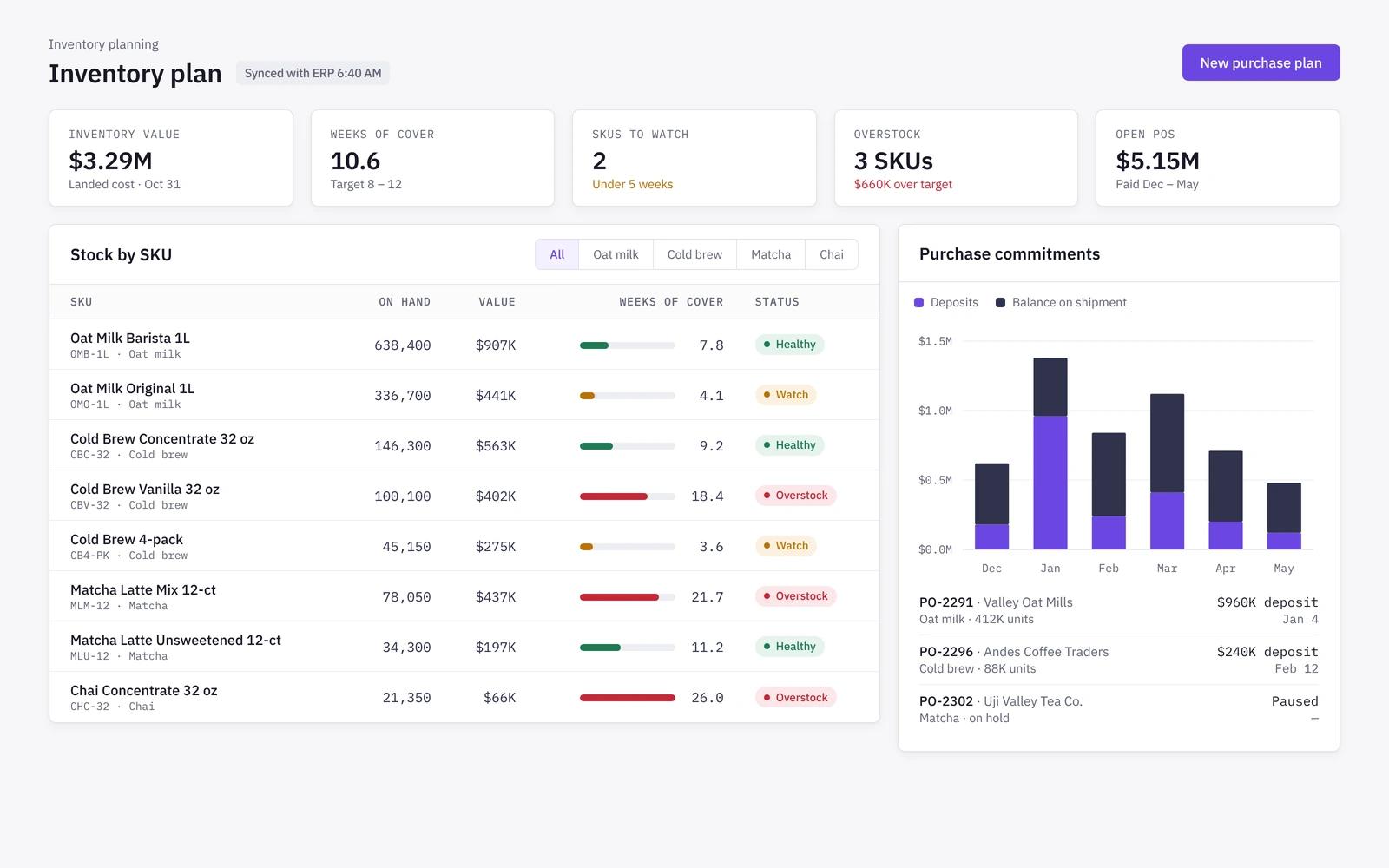
Valuation
Stock valued at landed cost
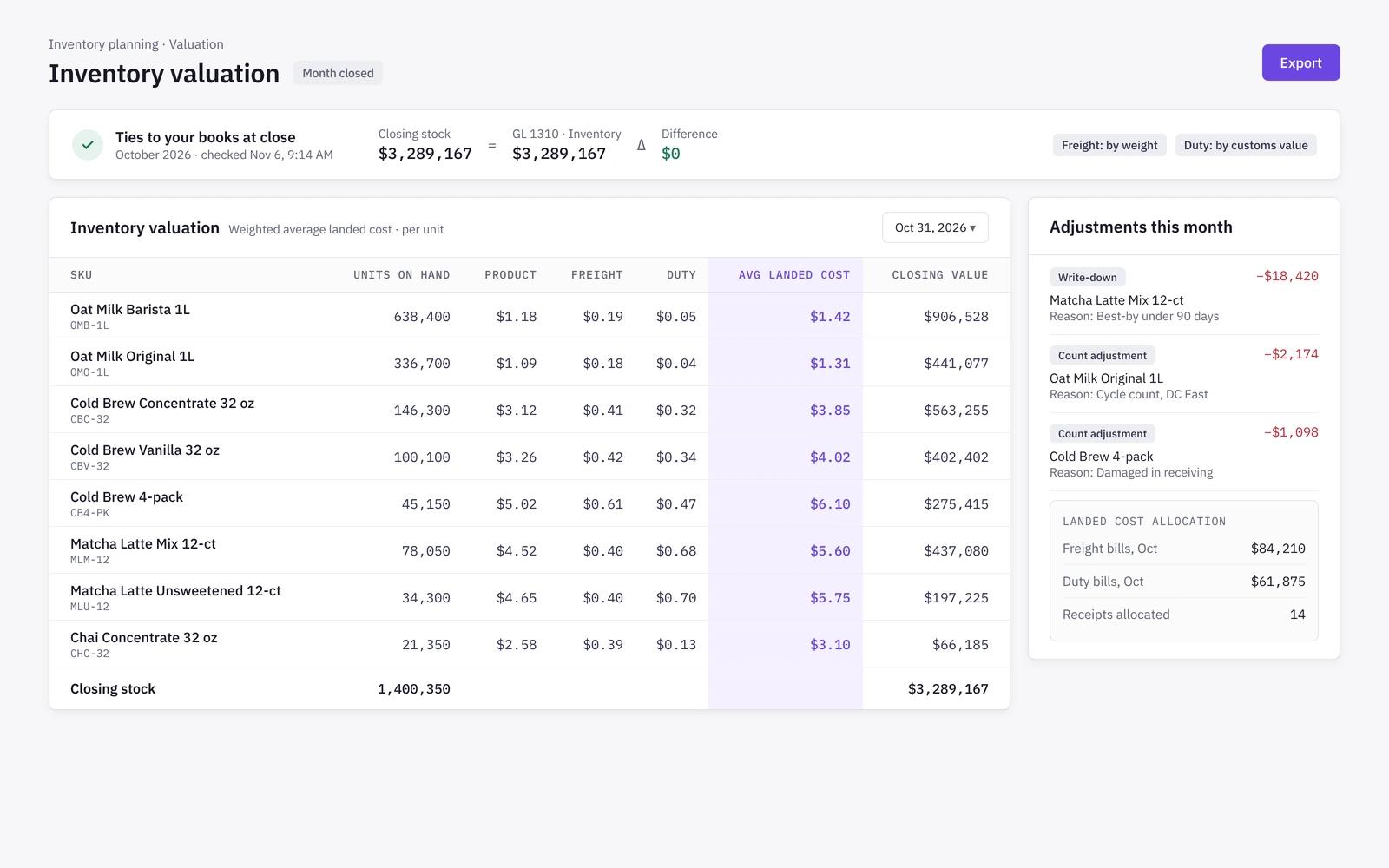
Every receipt carries product cost, freight, duty and tariff, valued at weighted average cost. COGS on the P&L and closing stock on the balance sheet come from the same numbers.
- Freight and duty bills allocated across receipts on a stated basis
- Closing stock tied to the inventory account in your books at close
- Write-downs and count adjustments booked with a reason
- Stock in transit and at third-party warehouses stays on your books until it sells
Purchasing
Purchase plans that show up in cash
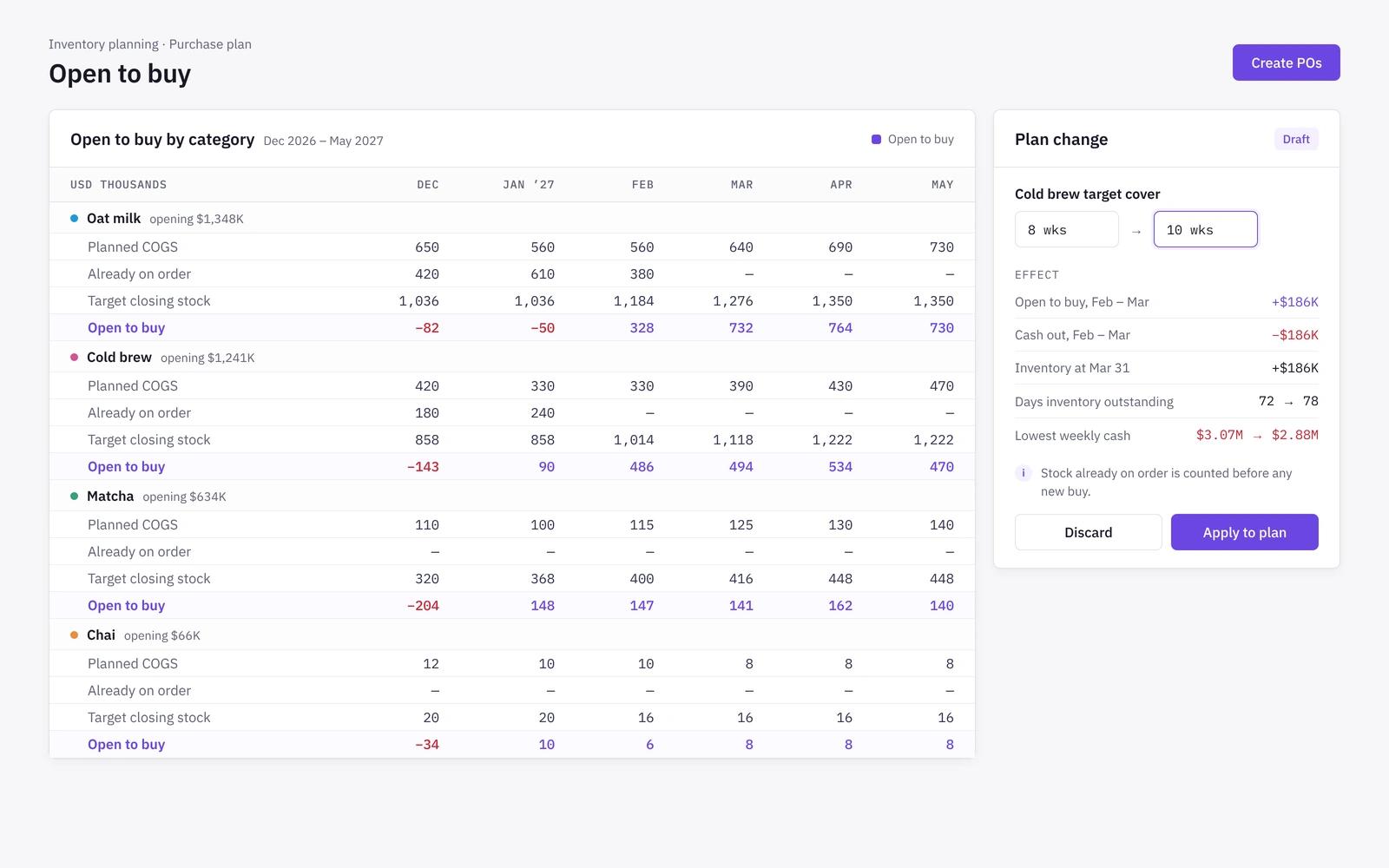
Plan purchases and open-to-buy in money by category and month. Each purchase commitment flows into the cash forecast and working capital. For the formulas behind reorder timing, read our reorder point guide.
- Open-to-buy by category and month from cover targets and planned COGS
- Stock already on order counted before new buys
- Plan changes show their effect on cash and working capital
- A reorder date signal for your team, never an automatic purchase order
Stock health
Ageing, cover and provisions in one place
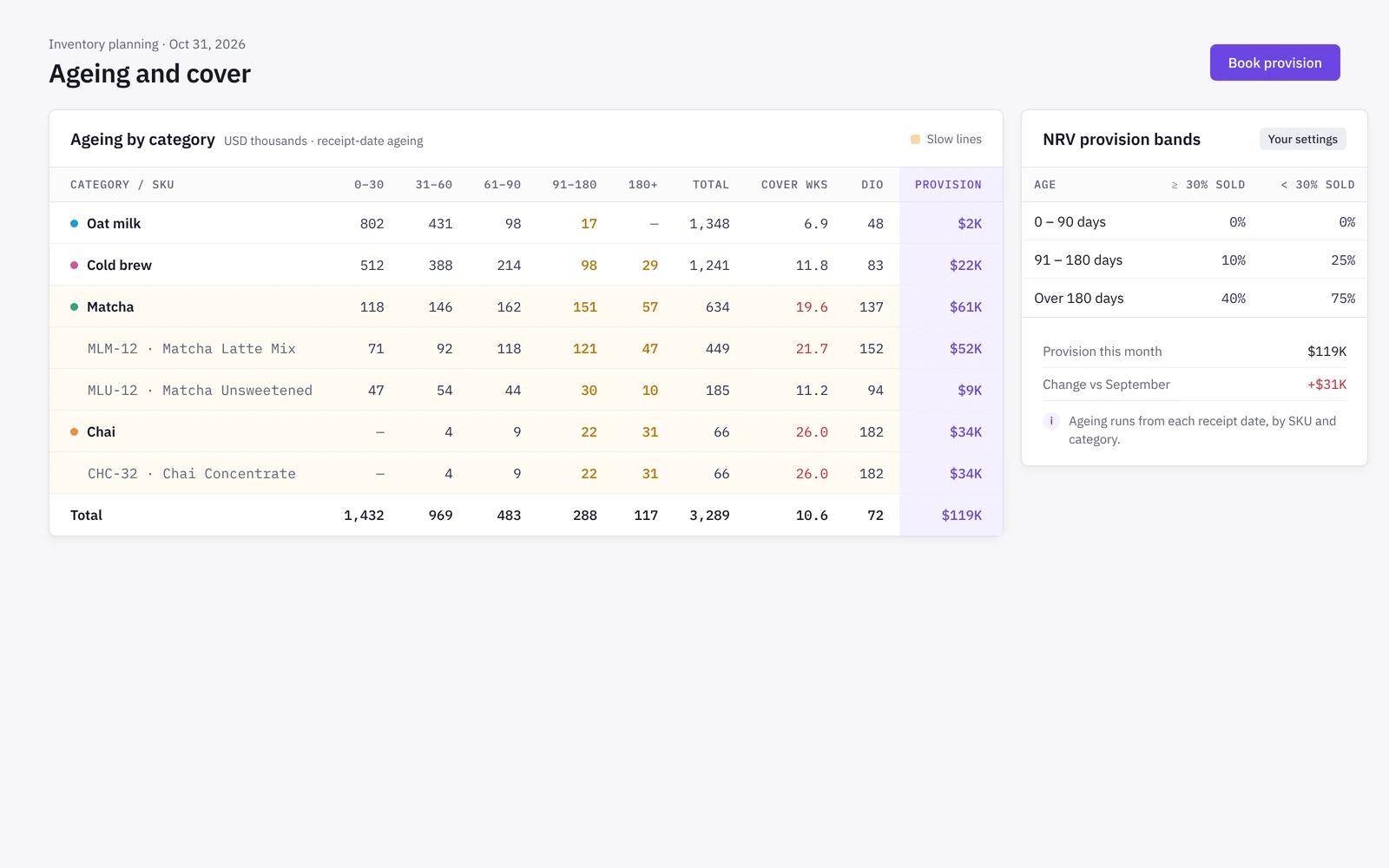
Stock is aged from its receipt date, measured in weeks of cover against the plan, and provisioned using bands your finance team sets.
- Receipt-date ageing by SKU and category
- Stock cover and days inventory outstanding by category
- Net realisable value provision from your own ageing and sell-through bands
- Slow stock flagged for a decision before it turns into a write-down
How it works
- 01
Connect
Connect Shopify, Amazon Seller Central, ShipBob and your accounting system. Upload receipts with unit cost, or bring them in from bill lines in your books.
- 02
Value
Niblin builds cost layers per receipt and values stock and COGS at weighted average landed cost.
- 03
Plan
Set cover targets by category. Open-to-buy, purchases and their cash effect follow from the forecast.
- 04
Close
At month-end, closing stock and COGS tie to your books before the month locks.
Inventory planning in spreadsheets vs in Niblin
Stock lists and buy plans often live in operations sheets, apart from the P&L and the cash forecast. The gap shows up when a purchase order lands in cash.
| Spreadsheet model | Niblin | |
|---|---|---|
| Valuation | Spreadsheet modelUnit cost from a price list | NiblinWeighted average landed cost per receipt |
| Freight and duty | Spreadsheet modelSpread by estimate | NiblinBills allocated across receipts on a stated basis |
| Buy plans | Spreadsheet modelSeparate from the forecast | NiblinOpen-to-buy from cover targets and planned COGS |
| Cash effect | Spreadsheet modelWorked out after the order | NiblinShown in cash before you commit |
| Ageing and provisions | Spreadsheet modelPeriodic manual review | NiblinReceipt-date ageing and NRV bands |
| Month-end | Spreadsheet modelCount and adjust | NiblinClosing stock ties to your books |
Frequently asked questions
Does Niblin tell us what to reorder?+
No. Niblin shows a reorder date signal, stock cover and open-to-buy in money so your team can decide. It never places or recommends a purchase order on its own. Purchasing stays with your operations team, and the plan shows what each buy does to cash and working capital.
How does Niblin value inventory?+
Niblin values stock at weighted average landed cost, re-averaged on each receipt. Landed cost includes product cost, inbound freight, duty and tariffs, excluding recoverable taxes. Storage after receipt is treated as a cost to serve, not capitalised. COGS on the P&L and closing stock both come from the same valuation.
Which data sources does inventory planning use?+
Unit sales and inventory come from Shopify and Amazon Seller Central, fulfilment data from ShipBob, and costs from receipts you upload or from bill lines in your accounting system. At close, Niblin ties closing stock to the inventory account in QuickBooks, Xero or Zoho Books.
How does inventory connect to the rest of the plan?+
Planned COGS comes from forecast units times landed unit cost. Purchases feed the cash forecast, closing stock feeds working capital and days inventory outstanding, and ageing goes into the board pack. Change the forecast and the purchase plan, cash and balance sheet move with it.
Does Niblin place purchase orders?+
No. Niblin plans open-to-buy by category and month from your cover targets and planned COGS, counts stock already on order, and gives your team a reorder date signal. Purchase orders are still raised in your own systems, and the plan shows the cash effect of a buy before you commit to it.
Learn the method
Related solutions
Plan inventory in the same model as cash
See how Niblin turns receipts, cover targets and purchase plans into a working capital forecast.
See how Niblin models it