
Variance analysis that explains every move by channel and SKU
Niblin bridges budget to actual through volume, channel mix, SKU mix and rate, ties it exactly, and drafts the commentary in your own channel and product names.
See how Niblin models it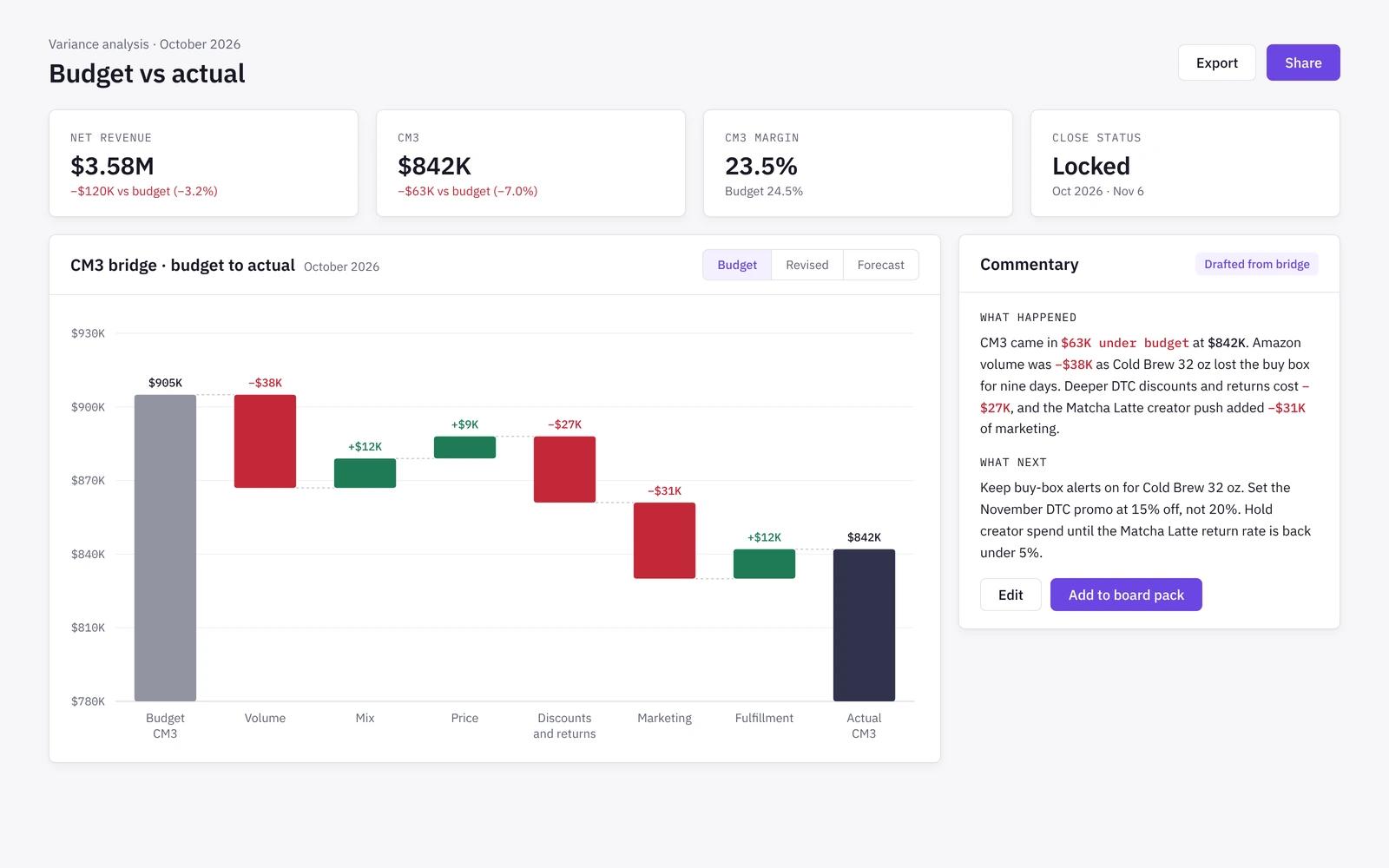
Bridges
Revenue and CM3 bridges that speak channel and SKU
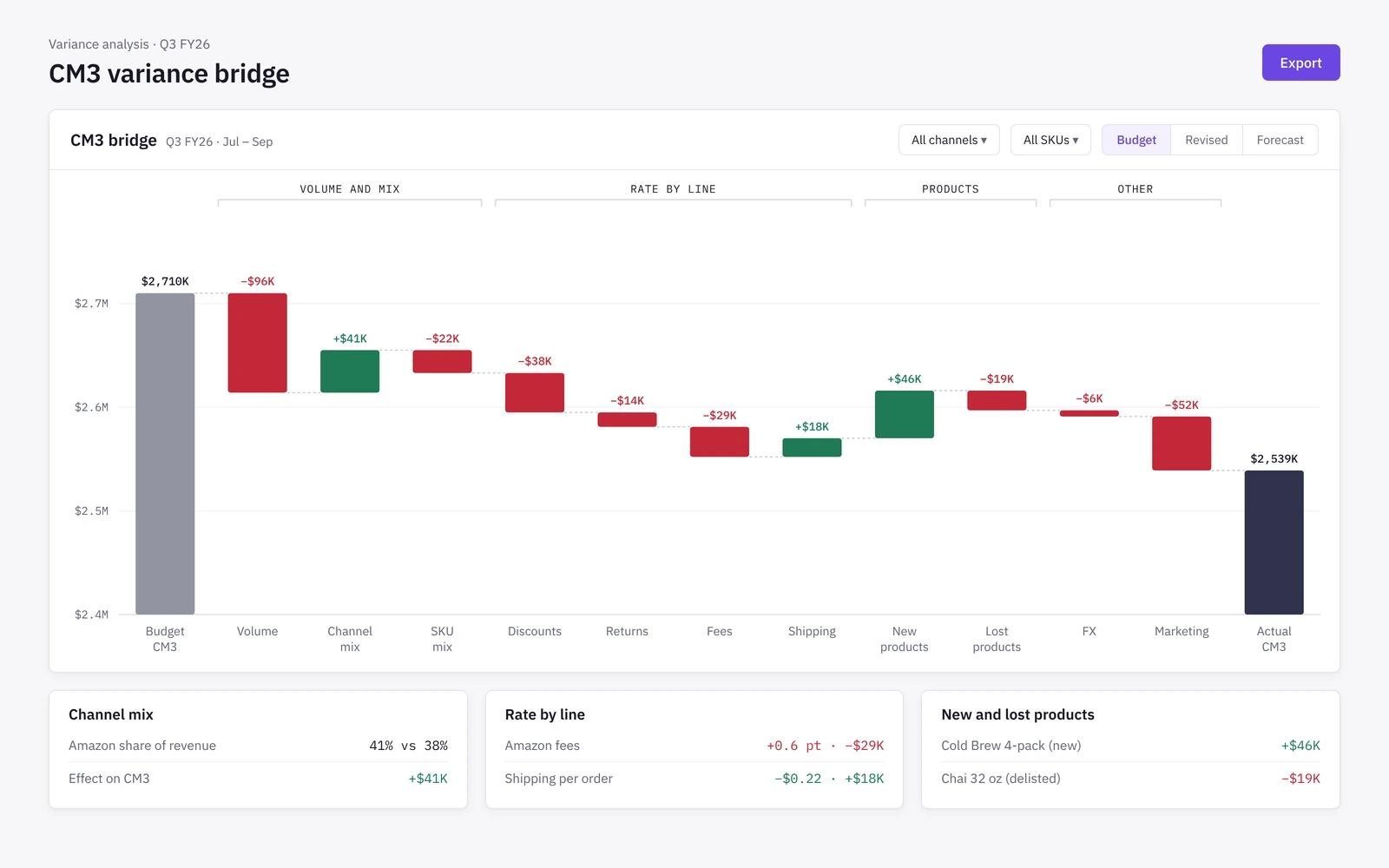
Variance is split into volume, channel mix, SKU mix, rate per line, new and lost products, and FX. The CM3 bridge carries the same steps down to contribution after marketing.
- Volume, channel mix and SKU mix
- Rate by line: discounts, returns, fees, shipping
- New and lost products shown on their own
- FX isolated as its own step
Tie-out
Bridges that tie, with no plug
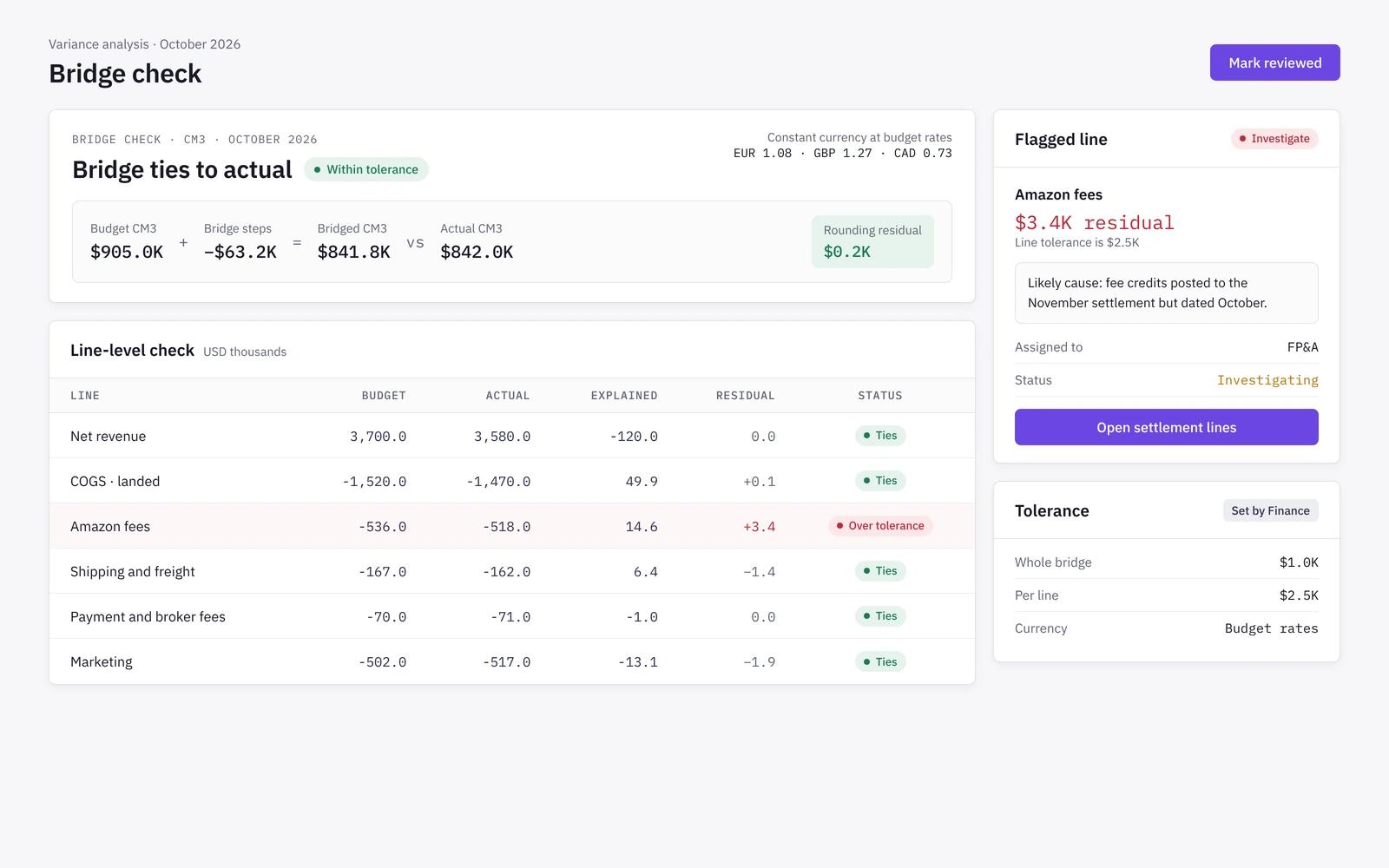
Every bridge is computed at full precision and must close exactly. A residual within tolerance is labelled as rounding; anything larger is flagged with its amount, never hidden in an "other" line.
- Constant currency at budget rates
- Tolerance set by your finance team
- Residuals flagged for investigation
- Same numbers in the board pack
Timing
Know which actuals have landed
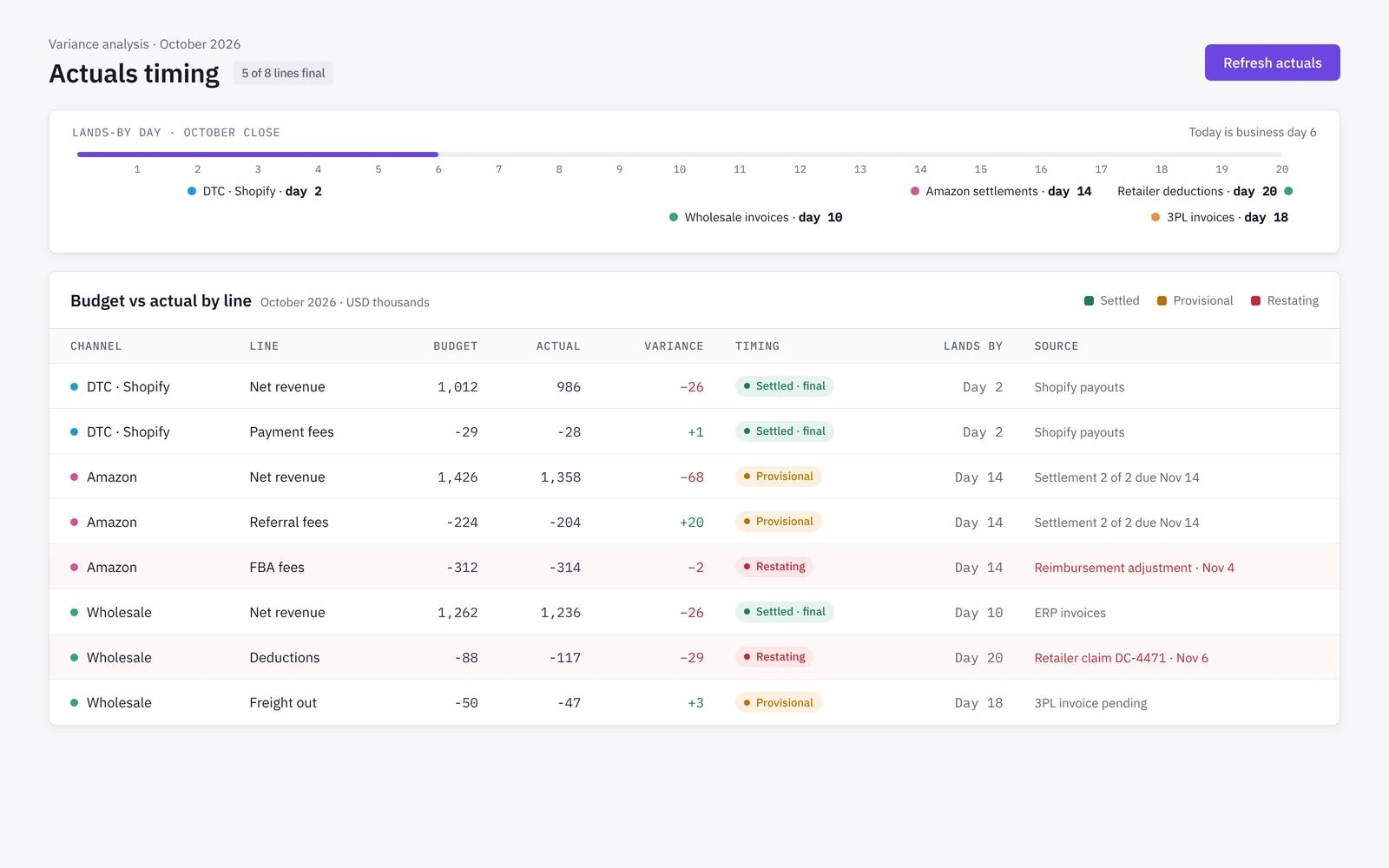
Fees, deductions and settlements arrive late. Each line is marked provisional, restating or settled based on when that channel normally lands, so nobody reports a variance on numbers that are not in yet.
- Lands-by day per channel
- Restating lines flagged with their source
- Settled lines marked final
- Fits wholesale deduction timing
Narrative
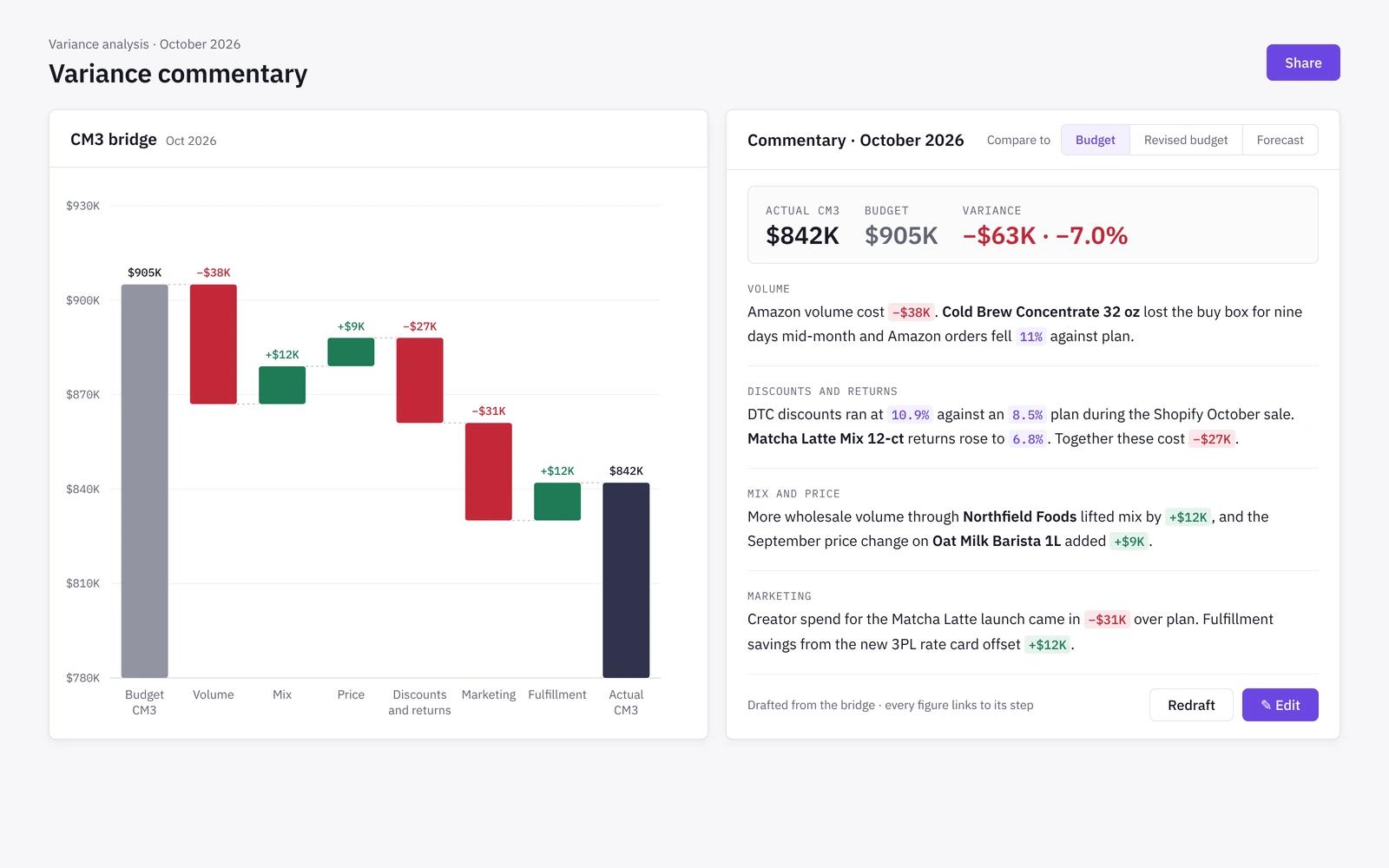
Commentary drafted from the bridge
Niblin drafts the variance commentary from the CM3 bridge, using your channel and product names. Your analyst edits it instead of writing it from scratch.
- Written from the bridge numbers
- Your own channel and SKU names
- Compare to budget, revised budget or forecast
- Ready for the month-end pack
How it works
- 01
Close
Actuals land from your stores, marketplaces and accounting system and the month closes.
- 02
Bridge
Niblin bridges budget or forecast to actual by volume, mix, rate, new, lost and FX.
- 03
Review
Your analyst checks the tie-out, timing states and the lines that moved.
- 04
Report
Edit the drafted commentary and send it with the month-end pack.
Variance analysis in spreadsheets vs in Niblin
A budget vs actual tab shows the gap. Explaining it by channel, SKU and rate, and tying it out every month before the pack is due, is where the hours go.
| Spreadsheet model | Niblin | |
|---|---|---|
| Bridge | Spreadsheet modelBuilt by hand each month | NiblinVolume, channel mix, SKU mix and rate |
| Tie-out | Spreadsheet modelA plug line to make it balance | NiblinTies exactly, with residuals flagged |
| Currency | Spreadsheet modelMixed rates in one total | NiblinFX isolated at budget rates |
| Late actuals | Spreadsheet modelUnclear which lines are final | NiblinProvisional, restating and settled lines labelled |
| New and lost products | Spreadsheet modelBuried in mix | NiblinShown on their own |
| Commentary | Spreadsheet modelWritten from scratch | NiblinDrafted from the bridge in your own names |
Frequently asked questions
What can we compare actuals against in Niblin?+
Actuals can be compared with the original budget, the revised budget that includes approved changes, and the last committed forecast. Each comparison uses the same bridge steps, so leadership sees one consistent explanation of what moved, whichever version they care about.
How does Niblin handle late fees and wholesale deductions?+
Each channel has a normal landing day and a window during which numbers can still restate. Lines are marked provisional until they land, restating while they can still change, and settled after that, so variance is never reported on fees or deductions that have not arrived.
Does the bridge include marketing spend?+
Yes. The CM3 bridge runs from budget contribution to actual contribution after marketing, so it shows the effect of volume, mix and rate changes alongside the change in variable marketing. Spend comes from the ad platforms and your books, not from attribution claims.
Who writes the variance commentary?+
Niblin drafts it from the CM3 bridge using your own channel and product names, and your analyst reviews and edits it. The numbers in the narrative come from the bridge, so the story and the figures in the pack always match.
Can we compare actuals to the forecast instead of the budget?+
Yes. The same bridge runs against the budget, the revised budget or a committed forecast, so you can explain the gap to whichever version leadership is tracking. Each bridge ties exactly, isolates FX at constant currency and carries the same commentary format, so the month-end pack reads consistently.
Learn the method
Related solutions
See your variance by channel and SKU
Bridges that tie exactly, with commentary drafted from the numbers.
See how Niblin models it