
Channel profitability down to every SKU, reconciled to your books
Niblin builds the CM1 to CM3 ladder for each channel and SKU from your orders, fees, settlements and ad spend, reconciled to your books. Wholesale and retail sit beside DTC and Amazon as connected channels, not a line in a spreadsheet.
See how Niblin models it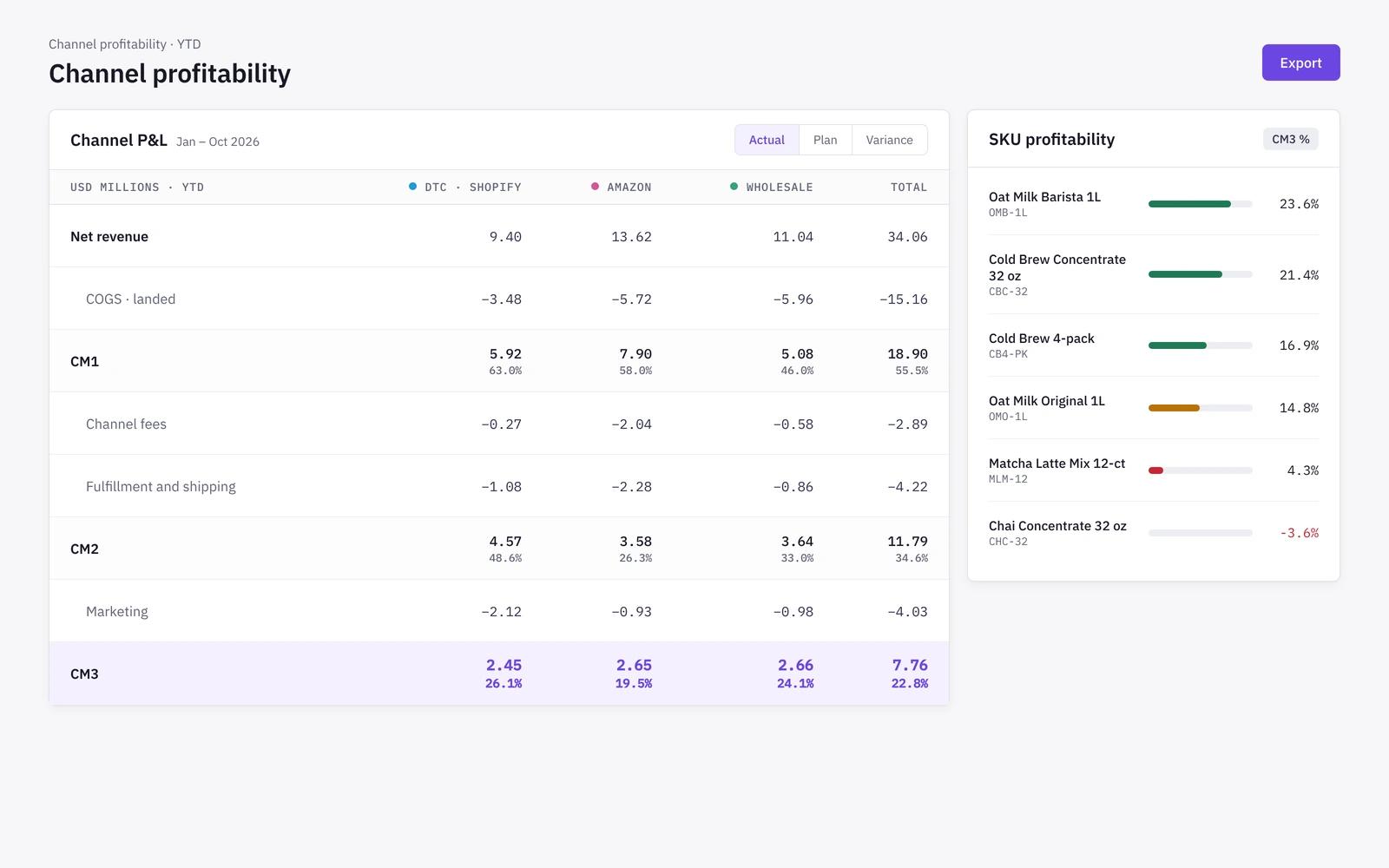
Waterfalls
A fee waterfall for each channel
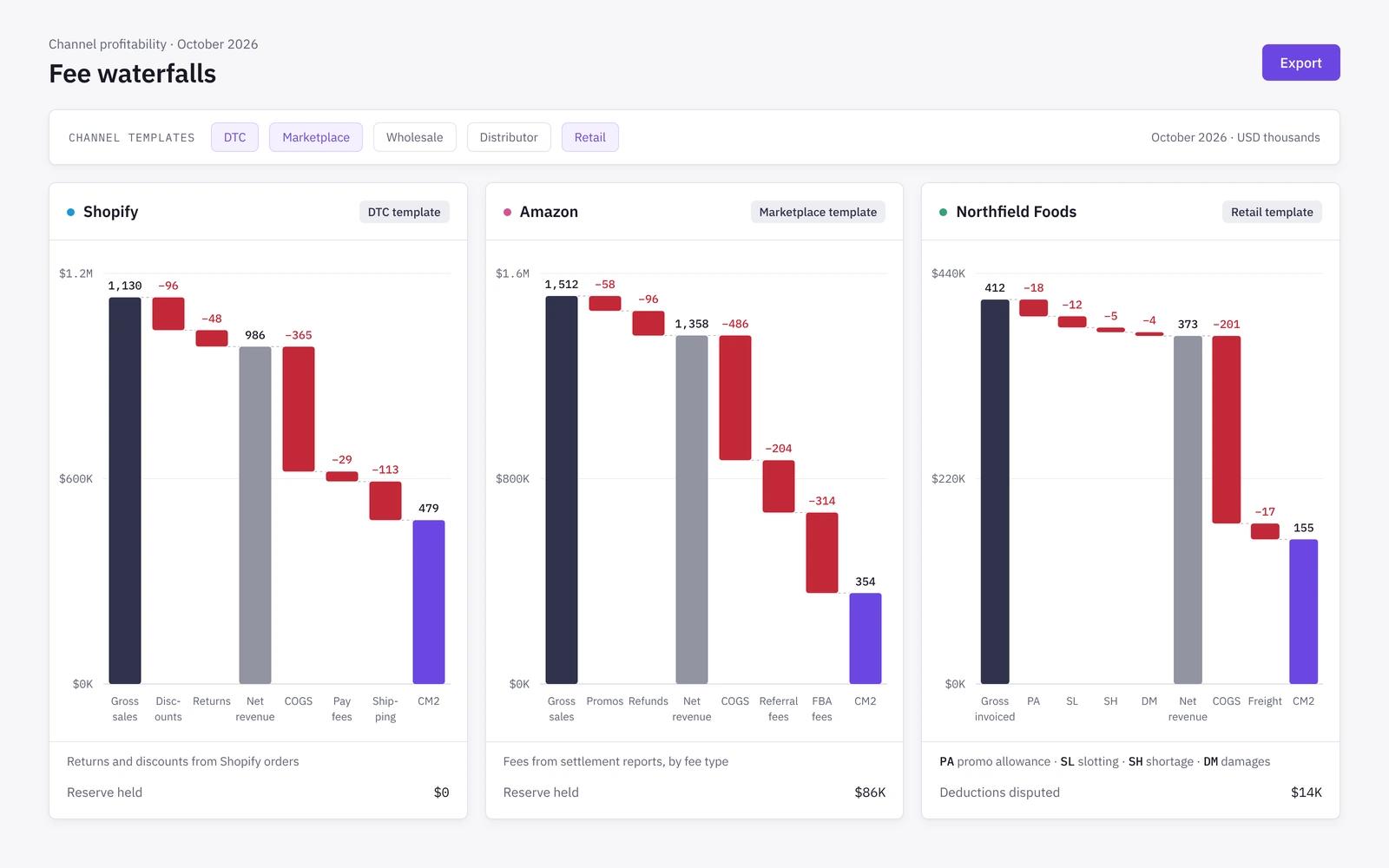
Every channel carries its own waterfall: marketplace and payment fees, fulfilment, shipping, storage, trade allowances and deductions, with its own settlement timing.
- Templates for DTC, Amazon, wholesale, distributor and retail channels
- Deductions grouped by the channel's own reason codes
- Holds and reserves tracked for each channel
- Add a channel without rebuilding the model
Contribution
CM1, CM2 and CM3 by channel and SKU
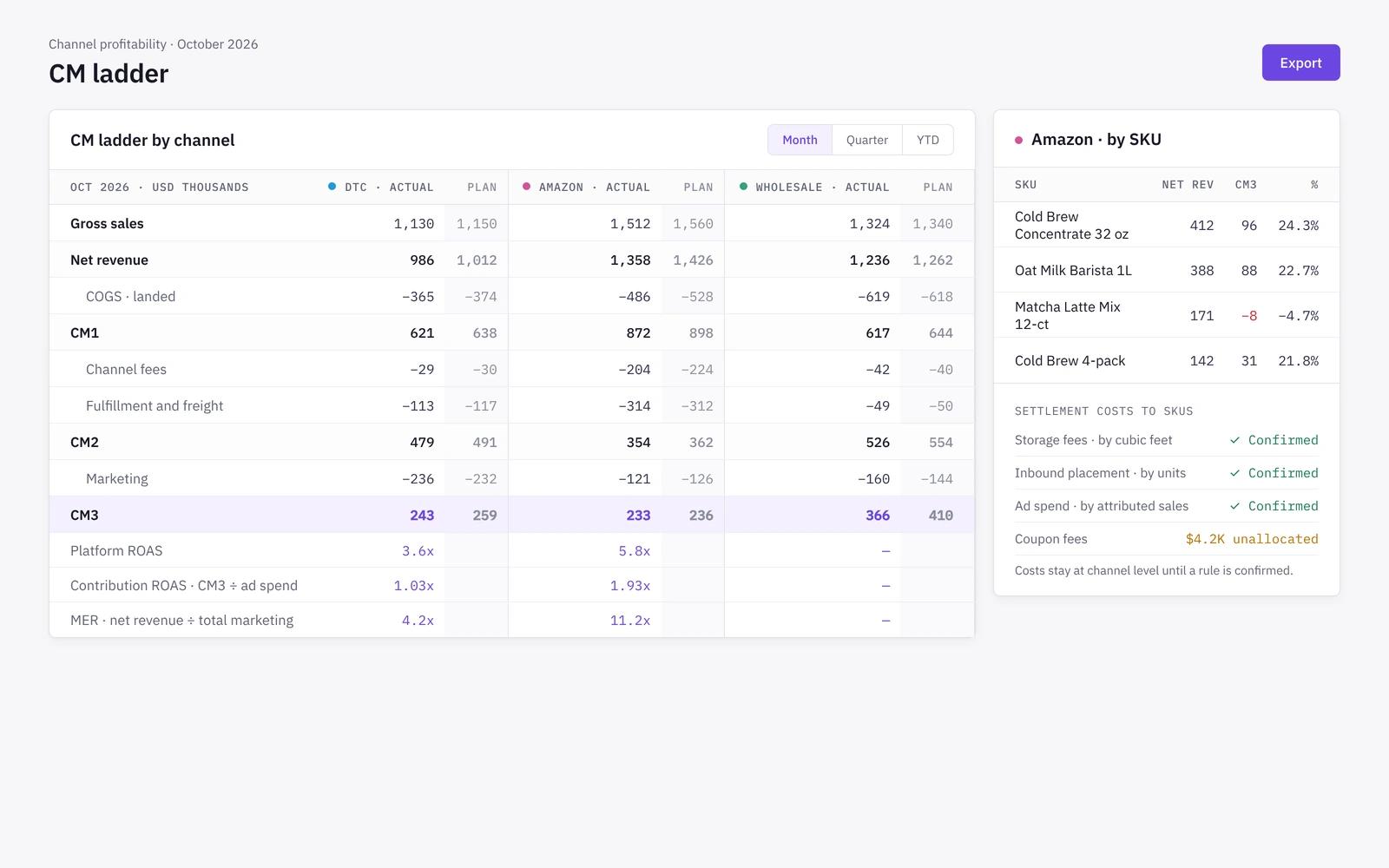
Net revenue less COGS gives CM1, cost to serve gives CM2, and marketing gives CM3. SKU views stop at CM2 unless you confirm an allocation rule for ad spend, so no number is invented. Our contribution margin guide explains the method.
- Actuals and plan on the same ladder
- Ties platform ROAS and MER to contribution, not revenue
- Settlement costs reach SKUs only through a confirmed rule
- Every figure traces back to source rows
SKU roles
Catch margin leakage early
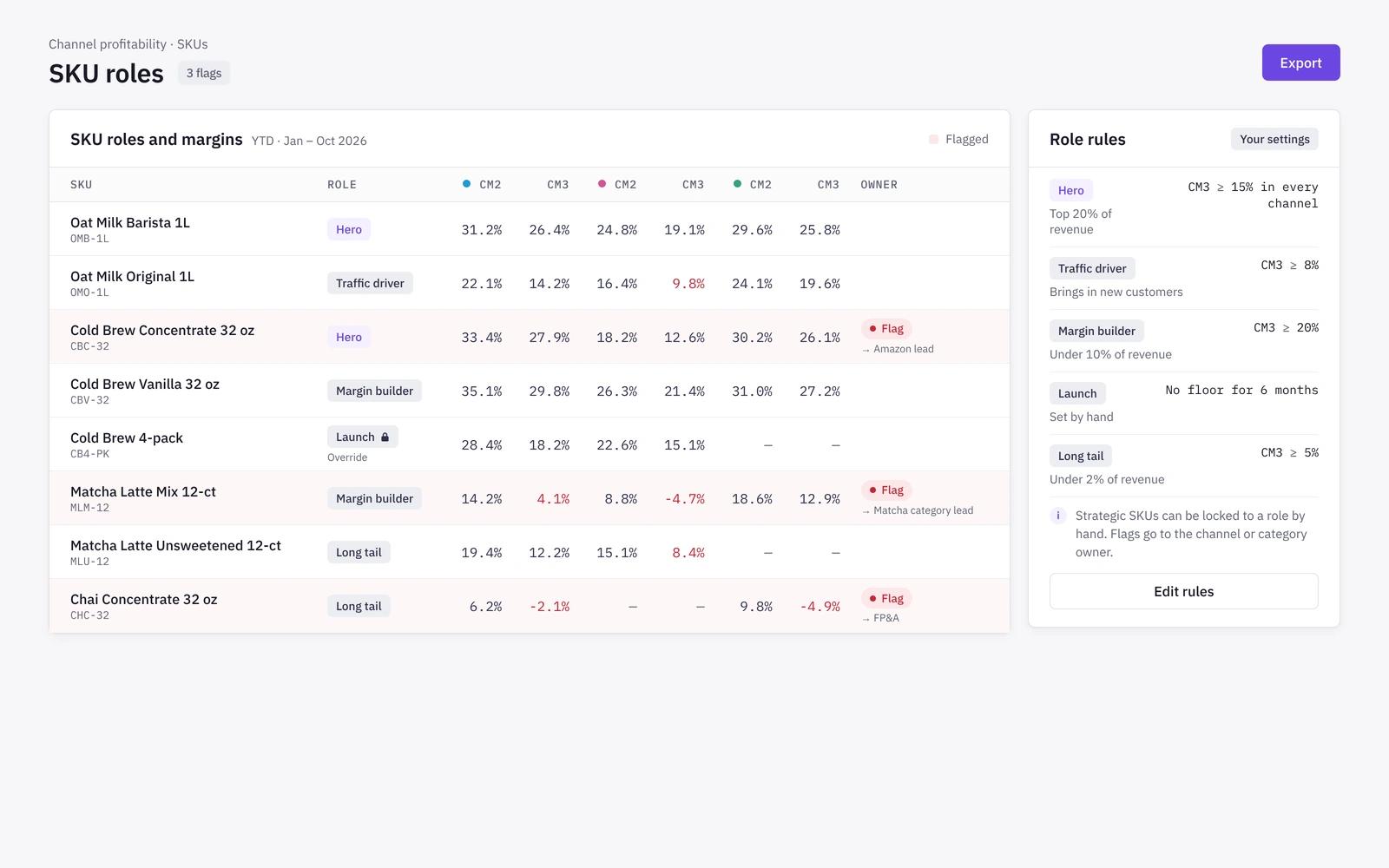
SKUs are grouped into roles such as core, growth, flanker and defensive using thresholds your team sets, and re-judged at each close. Lines that drift from plan are flagged for review.
- Role rules are your settings, not product defaults
- Manual overrides for strategic SKUs
- Channel and SKU flags routed to the right owner
- Feeds price, pack and channel scenarios
How it works
- 01
Connect
Connect Shopify, Amazon Seller Central, Amazon Ads, Meta Ads, Google Ads, SPS Commerce for wholesale and retail, and your accounting system.
- 02
Assign
Confirm the ledger assignment for each channel's costs once, at setup. Niblin proposes it from your chart of accounts.
- 03
Reconcile
Platform figures are reconciled to the books, so channel margins tie to the P&L.
- 04
Review
Each month, compare channel and SKU margins with plan and drill into what moved.
Channel profitability in spreadsheets vs in Niblin
Channel P&Ls built in spreadsheets often stop at gross margin, or allocate shared costs once a year. Wholesale deductions and marketplace fees rarely reach the SKU.
| Spreadsheet model | Niblin | |
|---|---|---|
| Fee detail | Spreadsheet modelOne fee line per channel | NiblinA fee waterfall per channel template |
| Wholesale and retail | Spreadsheet modelA line in the model | NiblinConnected channels with their own deductions |
| Margin depth | Spreadsheet modelGross margin by channel | NiblinCM1, CM2 and CM3 by channel and SKU |
| Marketing | Spreadsheet modelAd spend judged on platform ROAS alone | NiblinTies platform ROAS and MER to contribution |
| Tie to the books | Spreadsheet modelReconciled now and then | NiblinReconciled to the books, traced to source rows |
| Margin leakage | Spreadsheet modelFound at year end | NiblinFlags routed to the right owner |
Frequently asked questions
How does Niblin handle wholesale and retail channels?+
Wholesale, distributor and retail accounts are connected channels with their own waterfall: net invoicing, deductions by code, co-op, allowances and chargebacks, plus their own settlement terms. Retail EDI data can come through SPS Commerce. They are planned and reported at the same SKU grain as DTC and Amazon.
Does Niblin allocate ad spend to SKUs?+
Only if you confirm an allocation rule. Ad spend always lands in CM3 at channel level. Without a confirmed rule, SKU views stop at CM2 and say so, rather than spreading marketing cost on an assumption nobody agreed to. You can change the rule later, and it applies from then on.
How is this different from a Shopify profit app?+
Shopify profit apps report marketing-grade margins on online orders. Niblin is FP&A: channel and SKU contribution reconciled to your books, set against plan, and connected to the forecast, scenarios and cash. Wholesale and retail sit in the same model, and every number traces to a ledger row.
Who uses channel profitability in Niblin?+
The FP&A analyst owns the model, the CFO or founder reviews channel margins against plan, and channel leads see their own channel. Each channel names a finance lead who confirms its ledger assignment. Access follows scope, so a channel lead sees only the channels assigned to them.
How are wholesale and retail deductions handled?+
Wholesale, distributor and retail channels each get their own fee waterfall, with deductions grouped by the channel's own reason codes and holds and reserves tracked separately. Those costs reach CM2 and CM3 for the channel, and reach individual SKUs only through an allocation rule your team confirms.
Learn the method
Related solutions
See your channels on one contribution ladder
See how Niblin reconciles DTC, Amazon, wholesale and retail margins to your books and sets them against plan.
See how Niblin models it